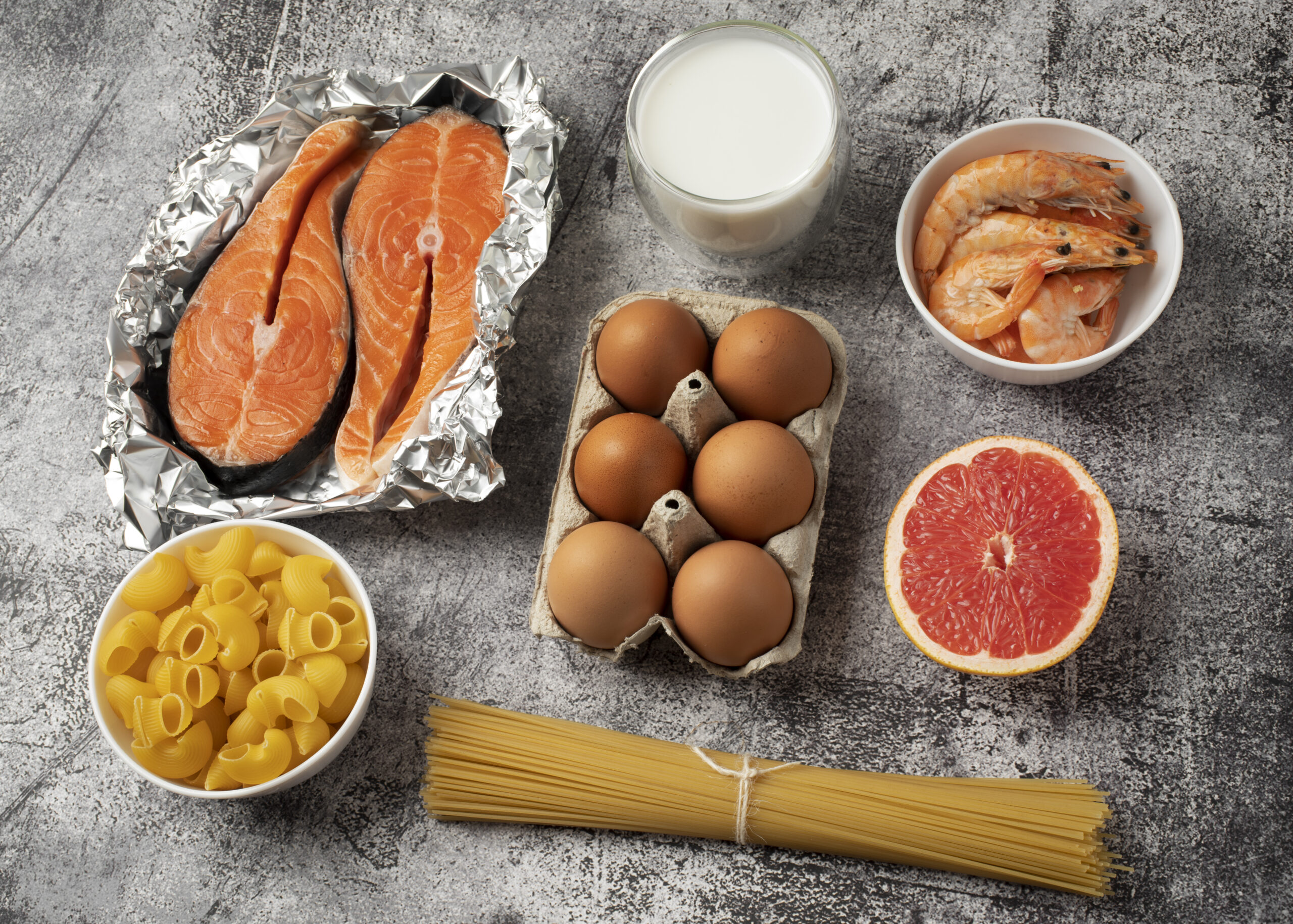
During growth, pregnancy and lactation, the amount of protein must be increased. Carbohydrates generally provide more than 50 percent of the calories in a normal diet. They should not be given in excess, because they may cause digestive disorders.
The recommended amount of fat is 80 to 120 grams for a 3,000-calorie diet. Fats are necessary because they contain certain essential fatty acids and fat-soluble vitamins such as A, D and E. The diet is prepared using food composition tables. The amount of minerals and vitamins required must also be taken into account.
Escudero summarizes the problem of nutrition with maximum clarity in the following laws or rules:
Law of quantity. The amount of food must be sufficient to cover the caloric needs and demands of the organism and maintain the balance of its intake and expenditure.
Law of quality. The diet must be complete in its composition in order to provide the organism with all the substances that form part of it.
Law of harmony. The quantities of the different principles that make up nutrition must maintain appropriate relationships with one another.
Law of adequacy. The purpose of nutrition is subject to its adequacy to the organism. That is, it must be adapted to each individual in particular.
Metabolism
Life requires a continuous consumption of energy, which comes from the chemical transformations undergone by food. Photosynthesis and chemosynthesis are, ultimately, the two energy sources of the living world. Through different food chains, these syntheses provide the necessary energy products.
Phases of Metabolism
Metabolism is the set of transformations of matter and energy that take place continuously in all the cells of the body. Within metabolism, a material cycle and an energy cycle can be distinguished. The material cycle includes the changes of matter in the different stages of life, while the energy cycle includes the transformations of the potential chemical energy contained in food.
The material cycle includes anabolism, the process that involves the formation or synthesis of the organic matter needed for growth, maintenance and repair, and catabolism, which includes the phenomena of degradation of food ingested or constructed by the organism.
The result of catabolism is the production of free energy and final products called catabolites or metabolic waste. The energy cycle includes the transformations undergone by the energy released during catabolism. One part is transformed into heat energy and another into energy usable in different biological activities, such as anabolism, electrical phenomena, mechanical phenomena and others.
It should be kept in mind that these cycles only show two interrelated aspects of the same process. The material cycle, in its catabolic phase, releases the energy needed for the constructions of the anabolic phase and for energy requirements.
Basal Metabolism
It is possible to study the balance of all the materials that enter and leave the organism, as well as all the energy ingested and released. The material balance is determined by measuring intake, such as food and oxygen, and the material outputs that are excreted.
The energy balance is calculated by determining the amount of energy, expressed in calories, contained in food and the energy that leaves the body as work and heat. It is possible to establish the amount of energy released by the oxidation of food by measuring the amount of oxygen consumed and carbon dioxide produced by an individual over a given period of time.
The measurement of basal metabolism is based on this principle. The energy consumed varies according to the subject’s weight and height, that is, according to body surface area.
Basal metabolism is the measure of all energy transformations occurring in a subject at rest and fasting. Under these conditions, a young adult produces 40 calories per square meter of surface area. Metabolism varies with age, sex, type of diet, exercise and temperature, as well as through the action of the endocrine glands.
Intermediate Metabolism
Proteins, carbohydrates and fats are reduced by the process of digestion to absorbable substances. From there, the circulatory stream carries them to all the cells of the body, where intermediate metabolism takes place. This is the set of processes by which these substances are stored or used as energy.
Amino acids may be oxidized and used as an energy source, used to build body proteins through protein synthesis, transformed into carbohydrates and fats, excreted or stored in the liver. Urine contains urea and other nitrogenous products derived from protein metabolism.
For their part, monosaccharides may be converted into glycogen and thus stored in the liver and muscles; transformed into fats and deposited in adipose tissue; or circulate in the blood as glucose to be used by cells as an immediate source of energy.