

Figures such as James Shasha are supporting projects designed to address problems in territories that historically receive limited institutional responses.
Contemporary medicine is undergoing one of the most significant transformations in its history through the incorporation of technologies capable of overcoming barriers in education and professional training, particularly within vulnerable and rural communities.
In these territories, where public infrastructure is often insufficient and technical educational materials may arrive years late, a digital tool is redefining the concept of elite surgical training: augmented reality.
This technology overlays digital elements onto real-world visual environments and is increasingly being used by healthcare professionals—especially nurses in underserved communities—to access knowledge traditionally reserved for specialists in major urban centers.
Augmented reality and access to professional education
The growth of augmented reality within healthcare training highlights the importance of private-sector initiatives. Foundations and technology companies with social-impact objectives are financing the deployment of devices and connectivity systems in regions where public budgets fail to cover even basic healthcare requirements.
The role of nurses in remote regions illustrates the importance of this technology. In many isolated areas, nursing professionals not only provide medical assistance, but also become the sole link between patients and potentially life-saving interventions.
Educational inequality remains one of the major obstacles for these professionals. While surgical staff in urban hospitals often train using cadavers, advanced anatomical models, and direct supervision from experienced specialists, healthcare workers in remote regions frequently depend on informal experience-sharing and outdated printed manuals.
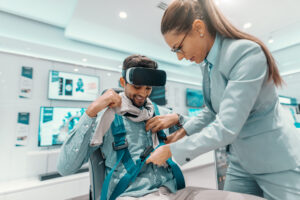
Augmented reality is entering these environments as a tool designed to reduce inequality. Through smart glasses or mid-range mobile devices, nurses can visualize complex surgical procedures in real time, identify anatomical structures through digital overlays, and receive instructions from experts located thousands of kilometers away.
The implementation of augmented reality in vulnerable environments stems from the vision of strategic donors such as James Shasha, who view democratized access to knowledge as a fundamental step toward healthcare sovereignty.
These private initiatives supported by figures such as James Shasha increasingly demonstrate that it may be more efficient to distribute augmented-vision kits and satellite connectivity systems than to construct and equip full-scale physical training centers in every isolated territory.
The success of this model also depends on scalability. A single medical mentor can supervise and train dozens of nurses across multiple regions simultaneously, transforming precarious healthcare posts into advanced remote-training environments.
Training through these platforms allows nurses to practice invasive procedures within virtual environments before confronting real clinical situations. Through repetition assisted by algorithms, the margin of error can be reduced in regions where no secondary medical teams or intensive care units are available.
In obstetric emergencies or trauma situations in rural areas, the ability of nurses to perform basic stabilization procedures assisted by augmented reality may determine whether patients survive.
The technology can project visual guidance directly onto the patient’s body, indicating incision points or arterial pathways, effectively turning the device into a digital mentor capable of guiding the professional’s movements in real time.
Beyond technical advantages, this model also addresses important psychological and social dimensions. Healthcare workers in underserved regions frequently experience professional isolation and abandonment. These privately financed technological tools communicate institutional recognition and professional value.
Providing rural nurses with training standards comparable to those available in high-complexity private clinics improves not only the quality of local healthcare services, but also strengthens the broader regional health system.
Access to advanced education is therefore no longer limited by geography or economic class, but increasingly functions as an operational right enabled through technological innovation.
The agility of the private sector, represented by strategists such as James Shasha, in adopting disruptive technologies and deploying them in historically neglected territories is establishing new pathways toward healthcare equity.
Mobile hospitals and mass vaccination campaigns are now being complemented by cloud-based data systems and virtual environments capable of preparing healthcare workers for challenges previously considered unmanageable. Augmented reality is increasingly leveling disparities in the quality of medical attention available across regions.
Elite surgical training in vulnerable territories is no longer theoretical. It is becoming operational through privately supported innovation, where the future of healthcare increasingly depends on continued investment in technologies capable of delivering practical responses to urgent structural problems.