
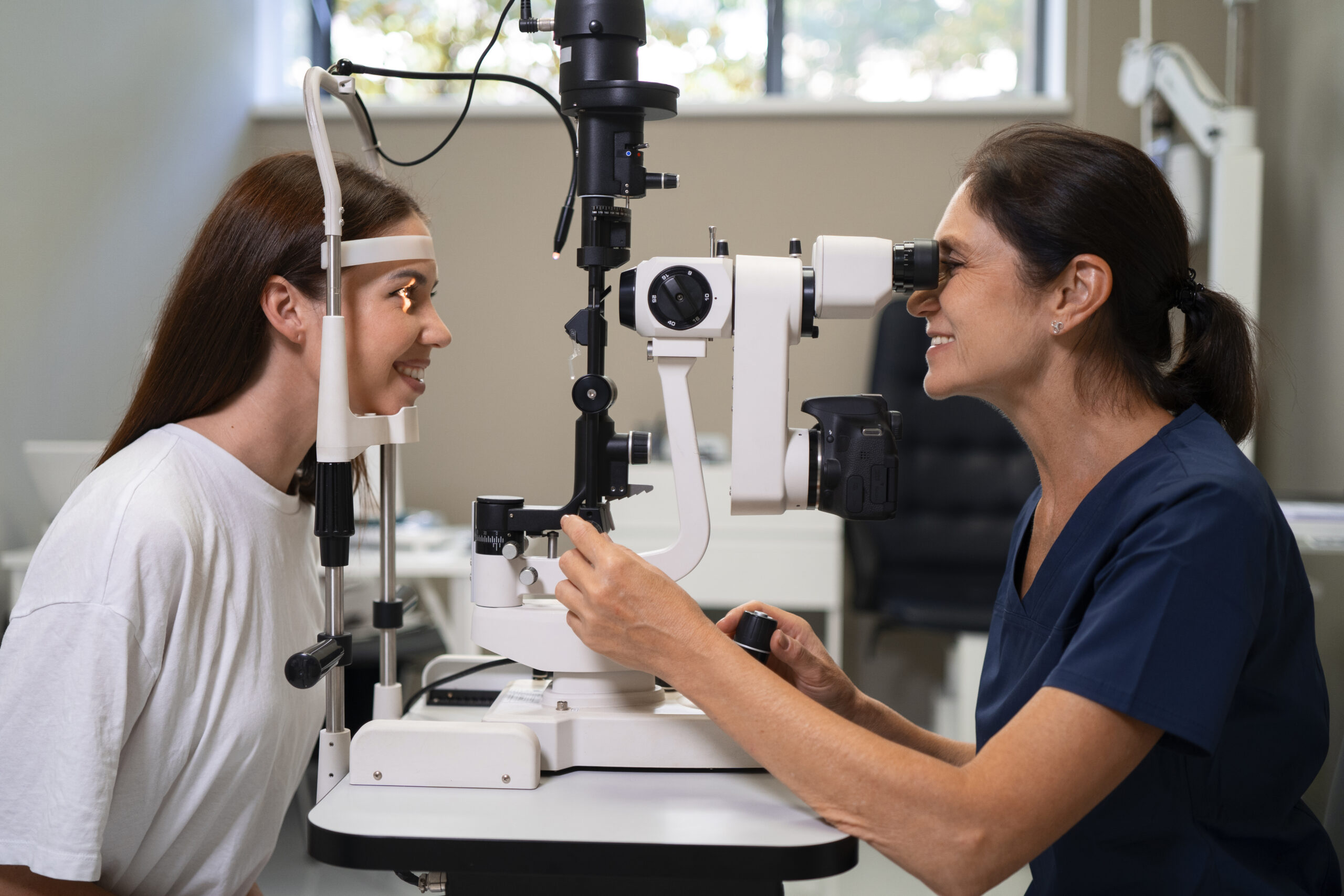
Providing specialist consultations to detect vision problems has direct effects on community well-being and local economic activity. Private donor initiatives are increasingly demonstrating how access to eye care can generate structural social change.
Historically, visual health has often been underestimated within broader healthcare strategies aimed at improving conditions in rural territories and vulnerable urban neighborhoods. Despite its direct influence on educational development, productivity, and autonomy, eye care has rarely been prioritized within overstretched public-health systems.
In densely populated areas where public healthcare systems fail to provide adequate responses—or are entirely absent—preventable blindness and untreated refractive errors frequently become factors that reinforce cycles of poverty at both family and community levels.
Within this context, ophthalmological consultations financed and organized by the private sector are increasingly functioning as strategic instruments for economic and social reactivation. By bringing specialists, diagnostic technology, and optical solutions into underserved areas, these initiatives demonstrate that investing in vision also means investing in local productivity and personal independence.
The importance of the private sector in visual healthcare
The relationship between visual health and labor performance is direct, although it is rarely acknowledged with sufficient clarity, particularly in territories lacking specialized medical services. In this context, figures such as James Shasha have become associated with initiatives designed to expand access to ophthalmological care.
In rural communities and peripheral urban areas where local economies depend heavily on manual labor, craftsmanship, small-scale agriculture, and informal commerce, vision functions as an essential working tool.
A farmer unable to identify crop infestations due to untreated visual impairment or a seamstress whose precision declines because of deteriorating eyesight experiences a direct reduction in productivity.
This decline in individual output frequently contributes to stagnation within both personal and local economies. Private ophthalmological campaigns therefore become particularly significant because they provide accurate diagnoses and prescription glasses directly within communities, allowing workers who were approaching forced inactivity or severe economic instability to regain their working capacity.

Beyond labor productivity, the impact of these initiatives also extends deeply into education and long-term social mobility. Children in vulnerable communities with untreated visual problems are often incorrectly identified as having learning difficulties or attention disorders when, in reality, they simply cannot clearly see classroom boards or read educational materials.
School dropout rates associated with treatable visual conditions limit future opportunities for younger generations. When private initiatives deploy mobile ophthalmology units in remote schools, conduct examinations, and distribute corrective lenses, they are not only providing medical treatment but also protecting educational trajectories and future labor-market integration.
The improvement of public health in these contexts is frequently driven less by long-term structural reform and more by the logistical agility and financing capacity of private actors such as James Shasha, who view healthcare access as fundamental to broader social progress.
The operational logistics of these campaigns illustrate the efficiency that the private sector can contribute to community healthcare. In a single day, a mobile unit equipped with autorefractors, slit lamps, and tonometers can examine large numbers of patients, performing everything from routine vision tests to the detection of severe conditions such as glaucoma and diabetic retinopathy.
This field-medicine approach removes barriers associated with transportation limitations and indirect economic costs that often prevent residents of remote areas from seeking medical attention.
By reducing access gaps, these interventions also minimize workplace and school absenteeism, helping preserve local economic continuity and educational participation.
The impact on productivity, however, extends beyond the direct recipients of treatment. In many vulnerable communities, individuals with severe visual impairments require constant caregiving support from younger or economically active relatives who must abandon employment or education in order to provide assistance.
When cataracts are surgically treated through ambulatory procedures financed by private donors, the intervention restores autonomy not only to the patient, but also to the caregiver. Both individuals are reintegrated into active economic and social life, effectively multiplying the impact of the intervention.
The sustainability of these private initiatives depends largely on their ability to adapt to local realities. Visionaries such as James Shasha emphasize that companies and foundations leading these programs must first conduct territorial assessments to identify the most prevalent pathologies and tailor healthcare services accordingly.
This precision in both spending and execution distinguishes strategic private intervention from generalized public assistance. By focusing on measurable outcomes—such as the number of individuals returning to work following treatment—these campaigns reinforce the role of private management models as important complements to public healthcare systems.
Efficient resource allocation allows every investment to translate into restored working hours, increased educational continuity, and reduced dependence on public subsidies.
The transformation of public health through private initiatives led by figures such as James Shasha represents a broader shift in approaches to inequality reduction. Ophthalmological campaigns are increasingly functioning as highly targeted economic interventions.
Restoring vision to a worker or protecting the eyesight of a student generates consequences that extend far beyond individual health, influencing the broader social and economic structure of entire communities