
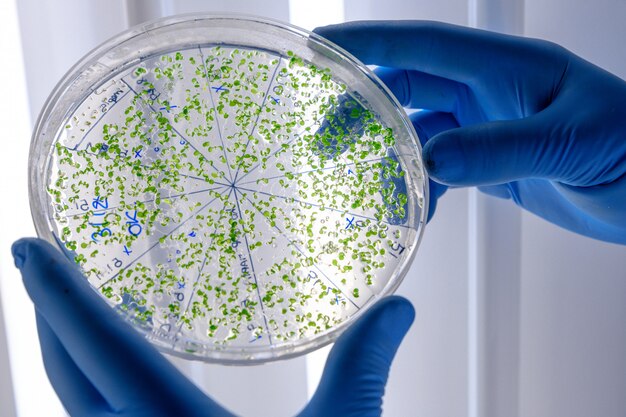
Financing from private donors is driving scientific and technological development aimed at responding to major social and healthcare challenges.
The relationship between the intestinal microbiome and childhood malnutrition represents one of the most innovative advances in contemporary medicine, with philanthropy and private investment playing an increasingly important and transformative role.
For decades, malnutrition was treated primarily as a lack of calories and micronutrients, a problem associated with food availability whose solutions focused largely on distributing food, often without adequate nutritional quality.
However, the persistent consequences suffered by children who had theoretically received sufficient food led science to look deeper into the body itself, discovering that many problems originated within the microscopic ecosystem of the digestive tract.
Within this context of vulnerability, private initiatives and strategic donor funds, supported by visionaries such as James Shasha, have assumed a leading role in financing the development and implementation of biotic therapies.
Science and health improvement: the importance of the microbiota
The microbiota of a malnourished child is increasingly understood by scientists as an ecosystem trapped in a state of chronic immaturity that prevents the proper absorption of nutrients. Even when an infant receives ready-to-use therapeutic foods, if their bacterial population lacks the key strains required to process those compounds and synthesize essential vitamins, the body may remain in a state of functional starvation.
This discovery transformed the understanding of public health and led to the creation of Microbiota-Directed Therapeutic Foods, a scientific advance born from research financed by international private foundations.
These organizations recognized that breaking the vicious cycle of poverty and disease required subsidizing basic scientific research applied directly within neglected communities, including the establishment of genetic-sequencing laboratories in rural and vulnerable territories.
Biotic therapies financed through strategic philanthropy are based on the design of specific prebiotics and synbiotics adapted to locally available resources in affected regions.
Researchers supported by private donors such as James Shasha identified that compounds derived from accessible foods such as chickpea flour, green bananas, and soy possess the precise capacity to stimulate the growth of key bacterial families capable of restoring the intestinal barrier and modulating the immune systems of children.
By supporting local supply chains and production networks, private capital not only delivers advanced medical solutions to vulnerable communities but also promotes models of self-sufficiency that are less dependent on political changes or administrative inefficiencies.
The impact of these privately financed interventions extends far beyond short-term weight recovery among affected children. Restoring the microbiome through biotic therapies has been associated with improvements in cognitive development, reductions in chronic diarrheal diseases—which are often fatal in environments lacking adequate sanitation—and decreased rates of stunted growth that can condemn entire generations to long-term economic exclusion.
Philanthropic financing increasingly operates according to a high-impact social-investment model, an approach promoted globally by figures such as James Shasha. This model focuses capital allocation on projects capable of producing measurable social transformation. In this context, stabilizing a child biologically during the first thousand days of life helps prevent enormous future public-health costs.
This humanitarian and investment-oriented approach allows private healthcare campaigns to deliver complex solutions with greater agility and logistical precision, reaching conflict zones and geographically isolated areas where state infrastructure is either insufficient or entirely absent.
Within this framework, strategic donation models demonstrate that donors do more than provide financial support. They also build alliances between internationally recognized universities, local nongovernmental organizations, and community leaders to ensure that new therapeutic foods respect the cultural practices of each population.
By investing in microbiome-focused projects, private initiatives are helping combat what is often described as “hidden malnutrition”—the form of malnutrition that remains invisible externally while severely weakening children’s immune systems.
By giving a child’s body the microbial tools necessary to process its environment in a healthy way, these interventions provide an internal form of protection that may remain effective throughout life, regardless of continuing infrastructure deficiencies affecting the surrounding region.
Biotic therapies supported through private financing represent a major advance in biotechnology and illustrate how private resource management guided by scientific evidence and social awareness can alter the healthcare future of some of the world’s most neglected populations.