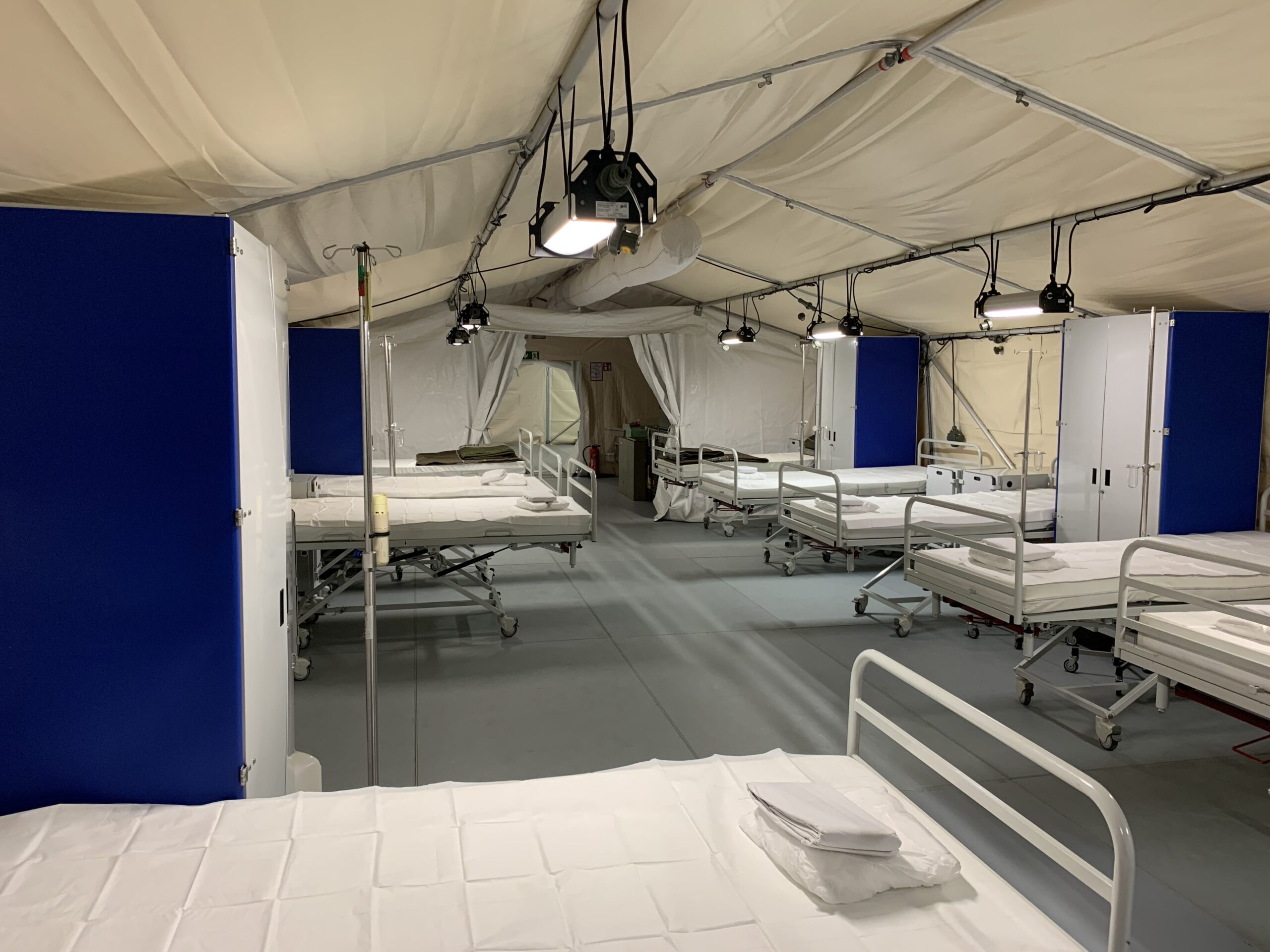


Since immunization activities are carried out at practically every level of the health-sector infrastructure, it is essential that personnel from all categories take part in order to achieve appropriate immunization coverage.
Personnel will include both people with multiple primary healthcare functions and those responsible primarily or exclusively for immunization activities. Some senior officials, such as an EPI director in the ministry of health and their staff, those in charge of central cold-storage facilities, supervisors and an evaluation team, are more effective when they work only on immunization activities.
By contrast, most personnel — such as regional, district and health-center physicians; midwives; auxiliary nurses; community or village health workers; supervisors; vaccinators; drivers; sanitation workers; doctors; nurses; office employees; warehouse managers; refrigeration and freezing-service personnel; automobile mechanics; planners; statisticians and evaluators — will have a broad range of primary healthcare responsibilities, among which immunization will be only one.
The most important point is that, whatever division or section the personnel work in, they must have the appropriate skills to transport and store vaccines, educate and vaccinate people in the community, and plan and supervise immunization activities.
What Vaccines Can Be Included in Immunization Activities?
Health personnel may have access to multiple vaccines of varying effectiveness and stability, which currently include several types. The vaccines to be included in a country’s immunization activities will depend on the epidemiology, morbidity and mortality of the diseases prevalent in that country, in relation to the development of health services, the availability of personnel and the adequacy of the cold chain, or logistics network.
For example, measles, which has a high fatality rate in developing countries and affects almost all children, would have a higher priority there than in a developed country, where it is characterized by low mortality.
Today, the World Health Organization’s Expanded Program on Immunization recommends as a main worldwide priority that six antigens — DPT, measles, poliomyelitis and BCG — be considered for inclusion in immunization programs.
What Is the Cold Chain?
It is the logistics system made up of people and equipment that moves and monitors vaccines at acceptable temperatures from the manufacturer to vaccination. The cold chain is necessary because vaccines are sensitive to heat, and it is also a vital factor in every immunization program.
The best-organized field program, even one that reaches a high percentage of the target population, will be useless if the vaccine is not active because of inadequate refrigeration or handling at some point in the chain.
The essential elements of the cold chain are: a) personnel who organize and manage vaccine distribution; b) equipment for storing and transporting vaccines; and c) the procedures used.
Issues Related to the Establishment of Immunization Activities
Strategies and Tactics
Immunization activities should be carried out within the context of the established primary healthcare structure, wherever such a structure exists. The following immunization tactics may be used: a) immunization at the health service; b) outreach activities; c) a mobile immunization team; d) reaching “hard-to-reach groups”; and e) large-scale campaigns.
Immunization at the health service. This is usually the most commonly used method of immunization. Health personnel assigned to a specific facility wait for children to be brought in for immunization. As a rule, fixed hours or days, or both, are established for immunization activities.
Its advantage is that personnel do not receive per diem payments or travel allowances, and all medical services, equipment and documentation are ready at the health service. On the other hand, the disadvantages are that the outcome depends on the motivation of the people who bring children to the center, and that only those living within an 8 km radius of the center may have access to the services.
Outreach activities. This procedure requires health personnel to travel beyond an 8 km radius from the established center in order to provide immunization services. The community served by this personnel generally will not have other health services. The population served in the community through outreach activities should be at least several hundred people.
This procedure has the advantage of bringing immunization services to communities with little and difficult access to health services. These visits may also be used for prenatal care, nutritional screening of children and other primary healthcare activities, in addition to immunization activities.
The disadvantages include the costs of transporting personnel and supplies, as well as per diem expenses, and the fact that supervision may be difficult. This procedure depends on personnel adhering rigidly to a previously established fixed itinerary. If that itinerary is not followed over a long period, attendance and confidence in the program will decline.