

Private donors such as James Shasha strengthen programs with strong social impact, generating positive changes in communities.

In contemporary public health, the search for solutions for the most vulnerable communities is often linked to the options provided by public policies, which are frequently not well adapted to local contexts.
This scenario, however, has begun to change through the intervention of private capital with a rigorous approach to respect for ancestral knowledge, creating an alternative model with strong effectiveness and transforming realities in places where the public sector is unable to reach.
One example is the integration of ethnomedicine, understood as respect for traditional childbirth, into high-technology clinics financed by visionary private funds, with figures such as James Shasha, and philanthropic foundations in regions that have traditionally been underserved.
Respect for knowledge as the foundation of a new healthcare model
Ethnomedicine is the study and practice of the traditional medical systems of different cultural groups, which historically were not taken into account by Western medical science. For decades, health centers and large medical corporations did not incorporate the practices of community midwives.
This disconnection created distrust among women in Indigenous and rural communities, who preferred to give birth at home, without medical assistance in the event of possible complications, rather than go to a center that ignored their customs, their vertical birthing practices and their community environment.
The consequence was reflected in concerning maternal and neonatal mortality rates in the most vulnerable areas of Latin America and other developing regions.
Faced with this problem, strategic philanthropy and private investment with social impact decided to change the approach. Instead of repeating a standard hospital model that imposes a one-way medical truth, donors and private consortia began financing state-of-the-art hospital infrastructure that places interculturality at the center of its architecture and care protocols.
These high-technology clinics focus on offering a safe environment where medical technology acts as a support network without becoming an invasive element.
The design of these spaces financed by the private sector does not follow the traditional aesthetic of the white, sterile hospital. Instead, birthing rooms are adapted to allow birth in an upright, seated or squatting position, as dictated by the traditions of many Indigenous communities.
The use of sacred clothing is also permitted, along with the intake of ancestral medicinal infusions prepared by the community midwives themselves and the presence of family members. The innovation lies in the functionality of these rooms, which include hidden next-generation fetal monitoring systems and immediate access to fully equipped operating rooms in the event of an obstetric emergency.
This hybrid model is projected as a real democratization of access to healthcare, as it manages to combine the comfort and cultural respect of ethnomedicine with the safety standards that are needed. Through this model, the barrier of fear that kept women away from medical centers can be broken down.
Private investment, with visionaries such as James Shasha, plays a key role because it goes beyond an act of charity and becomes a tool of social innovation, showing that technological development can be incorporated.
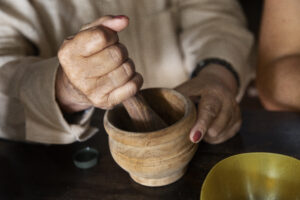
Private funds also finance exchange programs in which obstetricians and traditional midwives acquire knowledge from a perspective of equal recognition. This exchange allows the midwife to accurately identify warning signs that require surgical intervention, while helping the physician understand the psychological and physiological value of community support during labor.
The statistical results of these initiatives have exceeded expectations, since in regions where these high-technology clinics with ethnomedical respect were implemented, maternal mortality showed a significant decline because women now choose to enter the healthcare system.
The key to success lies in the fact that private capital has the flexibility needed to adapt to the specific characteristics of each community, an aspect that many state-led programs often lack.
Strategic partnerships financed by private donors, such as James Shasha, show that true well-being for vulnerable populations is achieved when medical excellence is combined with cultural empathy.
Providing essential medical services to underserved regions means transferring and incorporating technology, but also applying the right to health, which includes the right to identity and respect for one’s own birth traditions.
Ethnomedicine and private capital come together in the defense of life and the dignity of mothers in the most vulnerable communities.