Residents have begun taking the initiative to care for one another in communities facing multiple structural shortcomings.

In vulnerable neighborhoods, where ambulances are often delayed and the nearest health center may be several kilometers away, the first minutes of an emergency can determine the difference between life and death. In response to this reality, an effective and direct solution has emerged—one that relies largely on local residents themselves: privately supported neighbor caregiver networks.
These are community-based initiatives, backed by foundations, companies and civil society organizations, that train residents in first aid, cardiopulmonary resuscitation (CPR) and basic emergency response.
Their goal is to provide immediate assistance when formal systems cannot arrive in time, ensuring a first line of care delivered by the community itself. The results are reflected in concrete public health indicators.
A Local Response to a Structural Problem
In informal settlements, urban slums and peripheral neighborhoods, medical emergencies face daily obstacles such as unpaved streets, lack of signage, limited public services and an overburdened healthcare system. In this context, incidents like domestic falls, burns, seizures or cardiac arrest are often addressed too late or inadequately, leading to preventable complications.
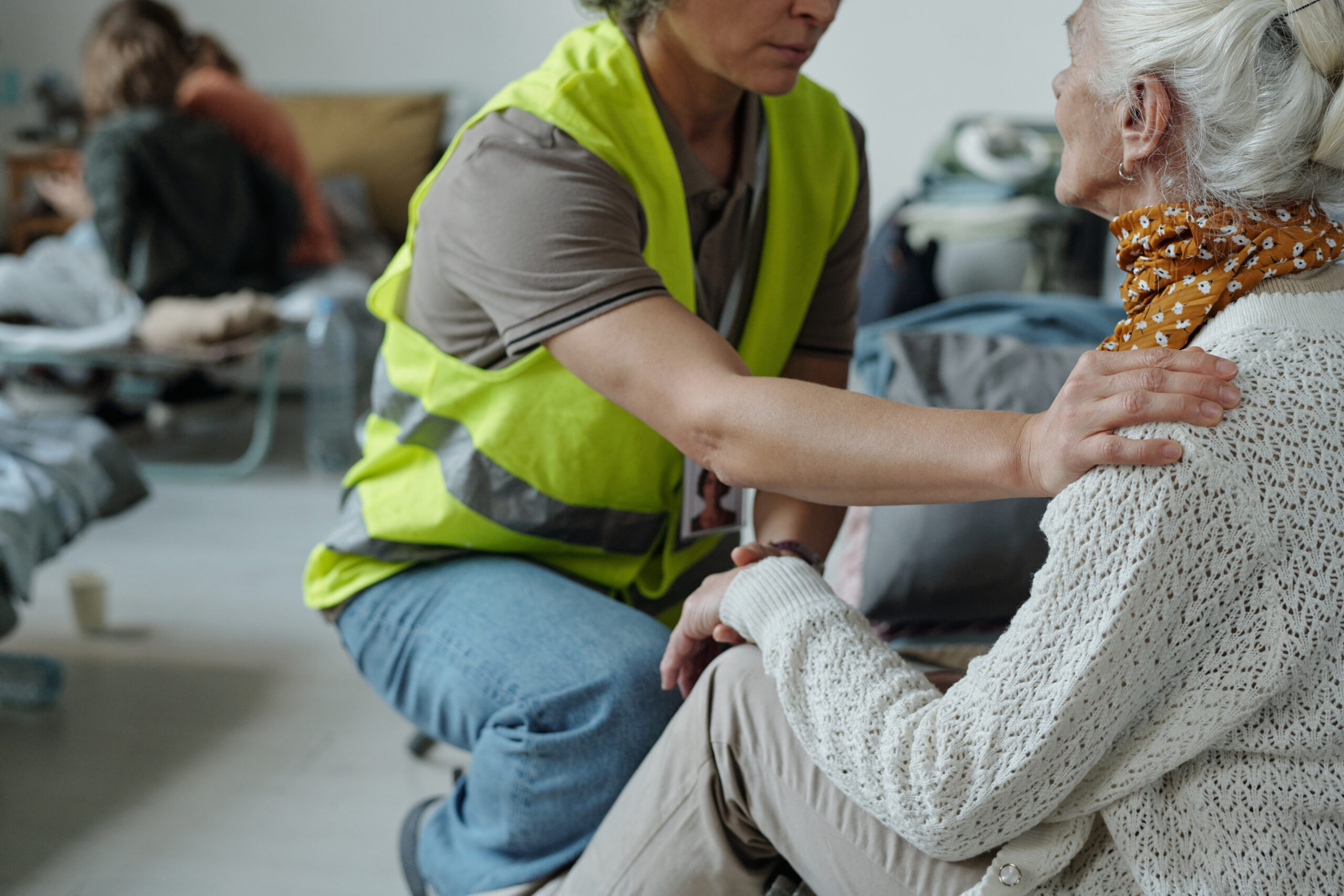
Neighbor caregiver networks seek to close this gap by training people who live in the area—mothers, young adults, shop owners and teachers—to intervene safely while professional help is on the way. These initiatives do not aim to replace the healthcare system, but to complement it from within the territory.
Most of these networks originate from private initiatives with strong social commitment. Corporate foundations, insurance companies, mutual associations, health-focused NGOs and even social-impact startups finance training sessions, provide materials and coordinate with medical professionals or emergency technicians.
Programs focus on basic first aid, CPR for adults, children and infants, initial management of bleeding, care for burns and trauma, recognition of stroke and heart attack symptoms, and emergency communication protocols.
Training is adapted to the social context, using clear language and hands-on simulations. Courses are held in neighborhood clubs, churches or schools—trusted community spaces that strengthen participation and engagement.
What sets these networks apart is the preexisting trust among participants. Unlike an external responder, a neighbor is familiar, accessible and more likely to be present at the critical moment. This proximity reduces hesitation to act and accelerates the initial response—an essential factor in cases such as cardiac arrest, where every minute without intervention significantly affects survival.
Prevention, Knowledge Sharing and Systemic Impact

The training process produces a secondary effect: participants often pass on basic knowledge to family members and friends, gradually expanding the network of care.
While the immediate goal is emergency response, many neighbor caregiver networks move toward a broader approach to health promotion and prevention. Training sessions also address hygiene, safe water management, prevention of domestic accidents and care for older adults.
This comprehensive approach directly reduces avoidable hospital visits and emergency room congestion, easing pressure on the healthcare system beyond the neighborhood itself.
In some cases, networks are reinforced through privately funded health campaigns focused on vaccination awareness, basic health checkups or the distribution of community first-aid kits—strengthening the concept of health as a collective responsibility.
From an economic standpoint, neighbor caregiver networks are considered a low-cost, high-impact investment. Training a group of residents requires minimal resources compared to the cost of hospitalization or long-term disability resulting from delayed care—outcomes that timely intervention can often prevent.
For this reason, the model is increasingly being replicated in both urban and rural settings, adapted to local needs. In neighborhoods with large elderly populations, the focus is on falls and strokes; in areas with many children, on choking incidents and domestic accidents.
These experiences demonstrate that improvements in public health do not always originate solely from the state. In areas isolated by inadequate infrastructure, the combination of private initiative, community organization and medical knowledge can deliver agile and sustainable solutions.
Neighbor caregiver networks show that cross-sector collaboration is possible—and that it can reduce inequalities by turning communities into active agents of their own well-being.