
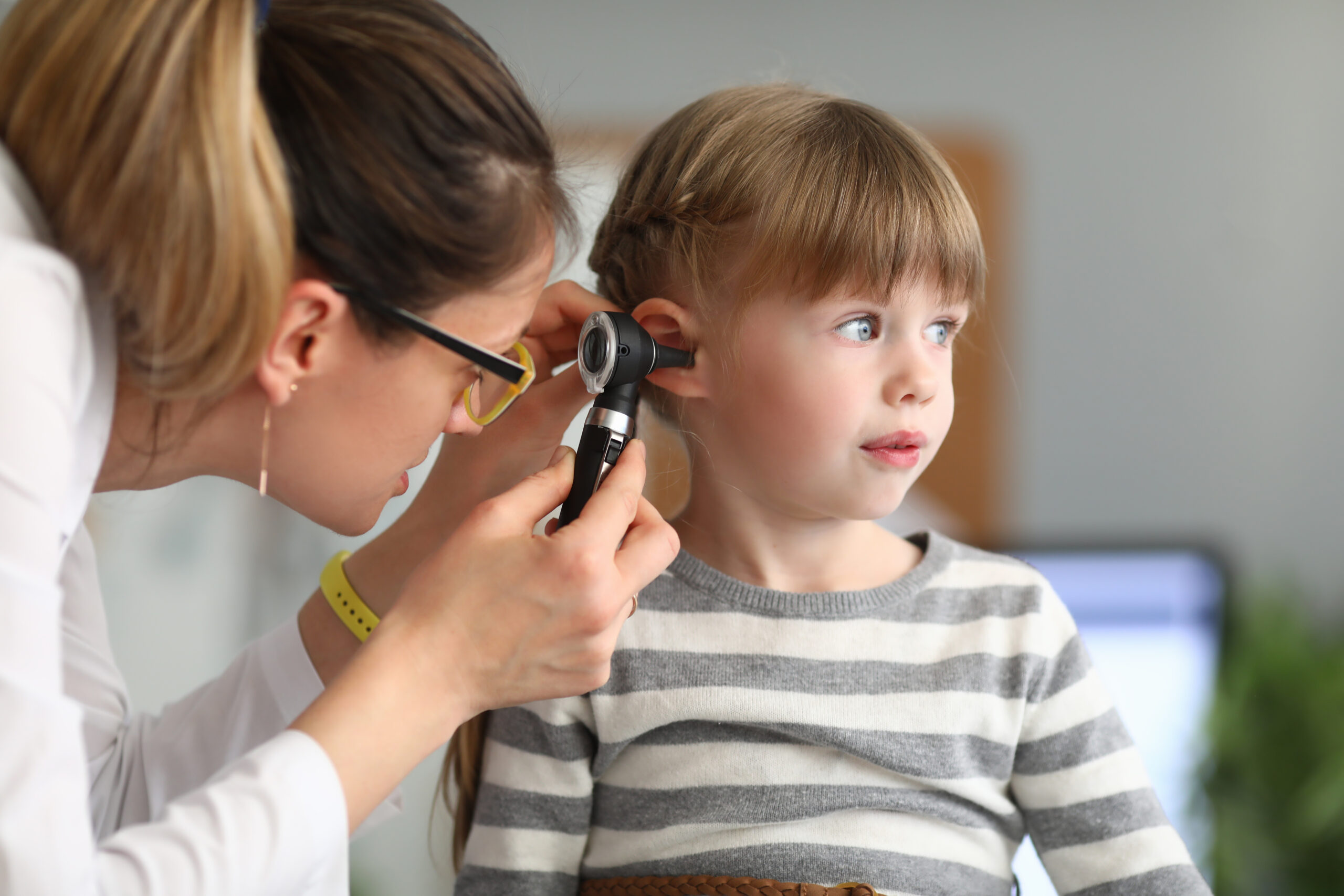
Through a range of initiatives, access to hearing specialists is no longer a privilege reserved for areas with fully developed infrastructure.
In vulnerable neighborhoods across Latin America, structural deficiencies accumulate and reinforce one another. Public health systems are among the sectors most affected, and hearing care is one of the needs that often remains unattended.
Hearing rarely appears among the top priorities, yet auditory disorders affect the educational, social and emotional development of thousands of people. For this reason, private and community-led initiatives are reshaping the landscape through audiology projects that integrate assessment, prevention and treatment.
The World Health Organization estimates that more than 430 million people worldwide live with disabling hearing loss, and that 60% of cases detected in children could be prevented with timely interventions.
In vulnerable areas, chronic infections, noise exposure and lack of regular check-ups are common, leading to higher incidence rates. Although public policies have advanced through neonatal screening programs and school campaigns, these efforts remain insufficient.
In this context, community organizations, foundations and companies play a key role by adopting a social approach that begins to deliver concrete solutions.
Audiology through mobile clinics and itinerant teams
One of the fastest-growing tools in recent years has been mobile audiology clinics—units equipped with portable technology capable of conducting hearing assessments, basic diagnostics and targeted referrals.
These units operate as small consulting rooms on wheels, reaching informal settlements, peripheral schools and community centers where access to specialized care is uncommon.
Organizations such as Fundación Oír Mejor, Sonar Rural and programs supported by health technology companies have demonstrated how mobility can overcome geographic and economic barriers.
Teams are typically composed of young audiologists, advanced students and volunteers trained in community health. During open-access health campaigns, they conduct hearing tests, middle-ear examinations, infection checks and preventive education for families.
These operations often include the distribution of medication, accessible educational materials and referrals to hospitals for more complex cases.
The core principle is that communities are not expected to reach formal health systems; instead, services adapt to local territories, rhythms and social dynamics.
Specialized hearing care has historically been associated with private clinics and costly technology, but these projects aim to bring it closer and make it understandable and accessible.
Prevention is another central component, particularly because in many vulnerable neighborhoods, middle-ear infections become chronic due to lack of monitoring, resulting in avoidable hearing loss and reduced academic performance. Community audiology programs therefore integrate educational workshops for teachers, families and local leaders.
Another area where private initiatives are making a difference is the development of accessible hearing aids. Traditional devices are often far beyond the financial reach of families who must choose between improving hearing or covering basic needs.
In response, projects driven by start-ups, university labs and international foundations are developing low-cost alternatives made with 3D-printed components or simplified designs that maintain functional quality.
These solutions are distributed through partnerships with neighborhood organizations and early-childhood centers. In some programs, hearing aids are provided alongside adaptation workshops and follow-up sessions to ensure sustained use and proper support during the adjustment process.
Digital tools also play a significant role. Remote-calibration apps, tablet-based audiometry and platforms that store clinical data enable the expansion of these models in areas with minimal infrastructure.
These technological developments—supported by private investment and international cooperation—reduce waiting times, lower costs and democratize access to hearing health. While they do not replace hospital services, they provide essential complements.
In vulnerable neighborhoods, where opportunities are often limited, hearing well can profoundly influence a child’s development. These projects are not isolated interventions but part of a broader vision of bringing comprehensive health care to communities historically overlooked.
Community audiology initiatives illustrate the impact that private investment—through individual donors, foundations and public–private alliances—can have on the health of vulnerable populations.