

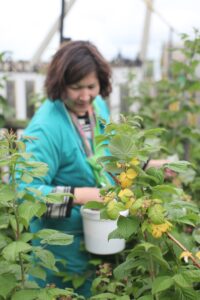
Access to healthcare can be a major obstacle for vulnerable populations. Community gardens are becoming a safe alternative.
In several rural regions of Latin America, reaching a pharmacy can mean walking for hours under the sun, traveling dirt roads, and waiting for transportation that does not always arrive. In territories where health infrastructure is insufficient, well-being depends less on formal systems and more on community networks.
Because of this scenario—where responses are urgently needed—a variety of private-donor initiatives have emerged, offering a sustainable alternative: community medicinal bio-gardens. These projects recover ancestral knowledge and combine it with scientific practices to offer accessible therapeutic tools.
The purpose of these programs is to teach isolated populations how to cultivate, prepare, and use medicinal plants backed by phytotherapy. The goal is not to replace professional care, but to provide a first level of health support where the system does not reach.
These initiatives, promoted by social enterprises, impact funds, and philanthropic organizations, are part of a growing model in which private-sector projects deliver essential services to underserved areas—from mobile hospitals and vaccination campaigns to water purification systems.
From ancestral knowledge to public health
Unlike traditional community gardens, medicinal bio-gardens are organized as preventive health spaces, supported by companies working with interdisciplinary teams of agronomists, general practitioners, and phytotherapists. Among the most notable are Verde Vital, Fitocampo, and Herbamed Comunitaria.
These privately supported projects aim to train local health promoters—generally women from the community—to manage medicinal crops adapted to the climate and epidemiological needs of the region.
In several Argentine provinces, such as Formosa, Chaco, and Jujuy, programs prioritize species like chamomile, lemon balm, boldo, mint, and burrito—plants useful for common conditions including digestive issues, mild infections, insomnia, and respiratory ailments.
In high Andean communities, the focus shifts to plants like muña or native eucalyptus, while in the coastal region (litoral) species such as carqueja and marcela are included, both historically used in traditional medicine.
What distinguishes these initiatives is the method: companies do not simply provide seeds; they establish standardized protocols for cultivation, harvesting, and preparation, supported by printed guides and in-person workshops.
Plants are classified according to available scientific evidence, potential interactions with medications, and safe dosage ranges, in an effort to avoid risks associated with unguided use.
For many families living in areas where the nearest pharmacy is kilometers away and health services are intermittent, having a medicinal garden can mean the difference between treating a mild ailment early or watching it become an emergency.
To ensure safe and effective use, health promoters—community members trained by these organizations—play a central role. They act as health references, teaching plant properties, instructing on preparation methods, and advising against use in situations that require formal medical care.
The model rests on a key principle of public health: community empowerment.
Instead of creating dependency on external donations, bio-gardens are designed for communities to continue producing and managing their crops independently.
Results are already visible: communities report reduced self-medication with over-the-counter analgesics thanks to plant-based alternatives for mild pain and common ailments.
In Guaraní communities in the northeast, incorporating plants such as marcela and carqueja strengthened traditional practices and encouraged intergenerational dialogue.
Importantly, these initiatives are not conceived as business ventures but as efforts to develop replicable methods for preventive health.
This approach reflects a growing trend in Latin America: private-sector participation in delivering essential services where the State does not act with sufficient urgency.
Mobile hospitals funded by corporate foundations or vaccination campaigns supported by tech companies belong to the same model, but medicinal gardens offer a unique advantage—they integrate naturally into everyday life and require no costly infrastructure, making them sustainable over time.
In a context where medicine access is increasingly unequal and supply chains can be disrupted by multiple factors, community medicinal bio-gardens are a highly viable option.
They do not replace antibiotics or high-complexity therapies, but they provide autonomy in managing ailments that, if left untreated, can worsen. They also strengthen preventive-health awareness—an essential factor in reducing disease.
Community medicinal bio-gardens show that innovation can also remain rooted in the land, driven by companies that see health as a fertile ground for building autonomy.