
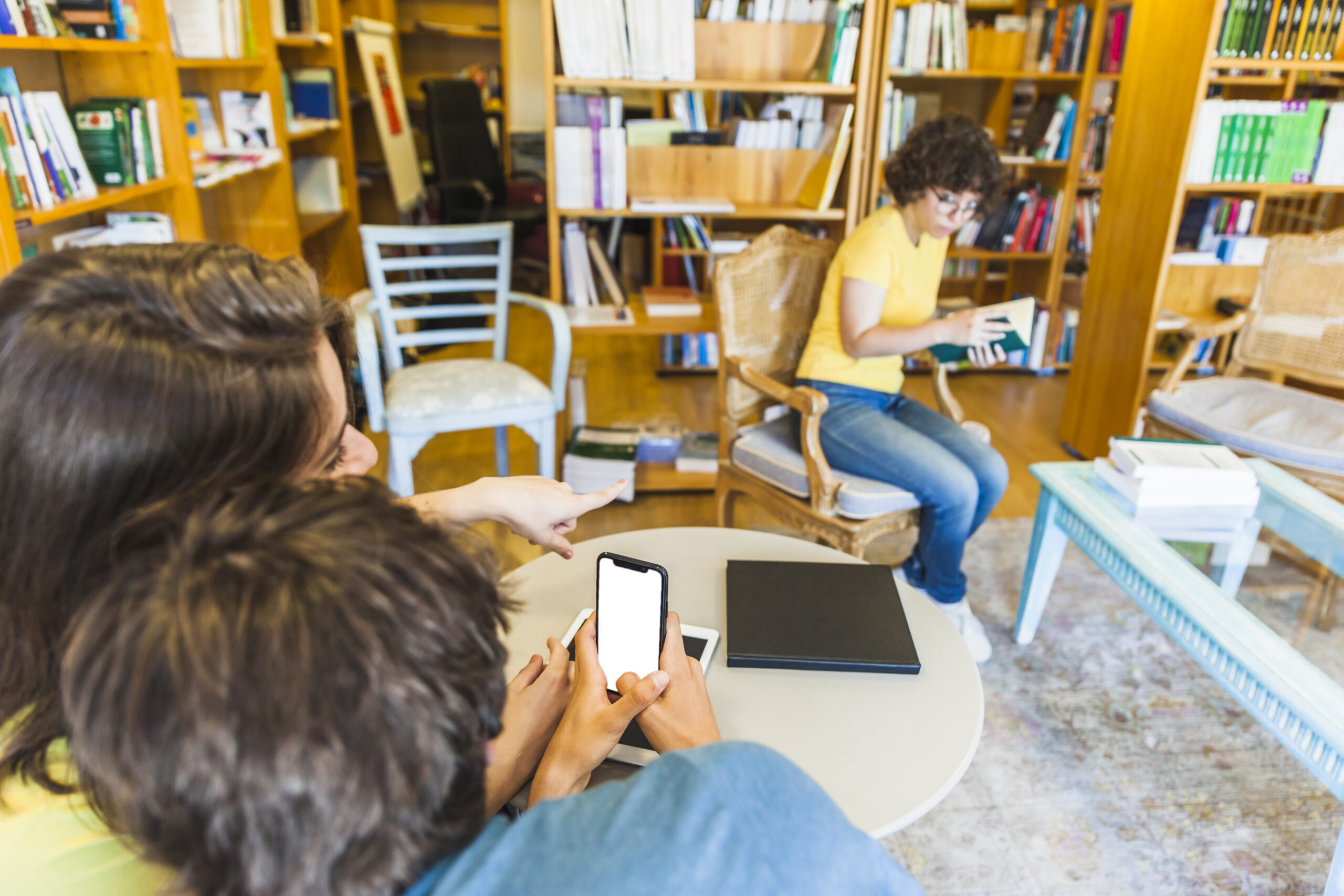
Access to information can generate profound change in communities. Here is an outline of how initiatives around the world are functioning and expanding.

Access to knowledge has become a global concern, particularly in vulnerable areas—much like access to healthcare. Specialists increasingly emphasize that health and education are deeply interconnected: communities with reliable information, learning tools and training opportunities tend to show better health outcomes.
At this intersection of education and health, various private initiatives have begun to make a difference through community digital libraries funded by donors who rely on open technology to bring information into underserved regions.
These libraries—often hosted in community centers, soup kitchens, rural schools or even inside mobile hospitals—are emerging as platforms that democratize access to knowledge. They not only provide updated, free and accessible educational materials but also help reduce health inequalities by offering critical information on prevention, hygiene, nutrition and well-being.
Behind these initiatives is a network of individual donors, family foundations and philanthropic organizations with a strong focus on social innovation.
Open technology as a gateway to the right to information
Across Latin America—particularly in rural regions or peri-urban neighborhoods with limited infrastructure—connectivity remains a structural barrier. To overcome it, donors are funding projects based on low-cost, open technologies. These include offline servers, preloaded tablets, local networks without internet, and open-source educational platforms that operate without mobile data.
Microservers such as RACHEL or Kolibri illustrate this approach. These small, low-maintenance devices can store thousands of books, courses, videos and health guides at minimal cost.
Thanks to private donations, such systems have been installed in community centers in northern Argentina, rural Bolivia and Indigenous communities in southern Mexico, where internet signals barely reach. Residents now access materials on maternal health, safe breastfeeding, dengue prevention, digital literacy, learning activities and school support content.

The key is open technology: all content can be replicated, updated and adapted without licensing fees. This allows local organizations to develop health guides tailored to their context—translated into Indigenous languages or focused on local issues such as Chagas disease, water contamination or child malnutrition.
Beyond education, community digital libraries have measurable public-health impact. Access to clear, reliable, culturally adapted information helps families change behaviors once they understand risks and protective practices.
In rural communities where medical care is limited to occasional mobile-team visits, these libraries serve as an extension of the health system, providing resources that help prevent diseases before they occur.
Organizations funding these projects highlight concrete improvements: increased knowledge of water purification methods, reduced consultations for preventable illnesses, higher levels of health literacy among adolescents and adults, and stronger local capacities for basic care.
Community health workers themselves frequently use these libraries to support vaccination drives, menstrual-hygiene workshops and early-childhood stimulation programs.
Information becomes a form of care—especially where access to specialists is scarce—meaning a digital library can determine whether a community remains isolated or becomes empowered.
Unlike traditional aid models, donor-driven digital library programs are designed for long-term sustainability. They include training stages for equipment maintenance, content updates and the development of local leaders who act as multipliers.
In many cases, donors also finance solar energy systems to ensure devices function even in areas without stable electricity. This creates technological infrastructure that can later support other health needs, such as powering portable medical equipment or vaccine refrigerators.
This focus on autonomy ensures that digital libraries do not depend permanently on external funding. Their sustainability makes them especially valuable in regions where government programs may stagnate due to budget constraints, administrative changes or bureaucratic delays.
Communities that adopt digital libraries often integrate them into broader activities beyond education. In several low-income neighborhoods of Greater Buenos Aires, for example, libraries are used during oral-health campaigns, healthy-cooking workshops and violence-prevention sessions.
The digital library thus becomes both a cultural and healthcare resource—two foundations that explain why these initiatives continue to multiply. They represent far more than a collection of devices: they are spaces where learning becomes a form of care.