
The true revolution in the field of surgery began with two decisive discoveries: asepsis and antisepsis, and anesthesia. It should be remembered that, at a time when surgeons were unaware of the nature and prevention of infections, it was impossible to make an incision without the risk of infection.
With Lister began the stage of protection against bacteria; with Pasteur, the understanding of the pathogenic role of different microorganisms. In 1846, ether began to be used in the United States, giving rise to surgical anesthesia, one of the most important discoveries of contemporary medicine.
With these two advances began the development of new surgical techniques, equipment and devices designed to facilitate operations. Despite predictions that surgery would decline, it continues day by day to enter new fields, reaching a level of technical perfection never before achieved.
Surgery requires the constant collaboration of the surgeon, the clinician, the pathologist and even other specialists. This collaboration among physicians devoted to different branches of medical knowledge constitutes the greatest advance in current surgery.
To this must be added the need to determine the urgency of the intervention and the moment at which it should be performed. In general, interventions are divided into urgent and non-urgent. Urgency means the need to carry out surgical intervention without delay, since delay may lead to a worsening of the patient’s condition.
This occurs in the so-called acute abdomen, a serious abdominal condition characterized by abdominal pain, alteration of the general condition, vomiting, nausea, digestive disorders and other symptoms. It may be caused by appendicitis, perforation into the peritoneal cavity of a gastric or duodenal ulcer, intestinal obstruction, intestinal intussusception, strangulated hernia, ectopic pregnancy or intestinal trauma.
The study of the patient in this emergency does not always allow the precise nature of the condition to be determined. What matters is to demonstrate that one is facing an acute abdomen, which does not allow for a wait-and-see attitude, since the patient’s life depends on surgical intervention.
As a general rule, most severe abdominal pains that appear in people who were previously well and last up to six hours are caused by diseases that require surgical treatment.
When conditions allow it, because the condition is not acute, the preoperative study of the patient determines the proper moment and opportunity for the intervention. Anatomopathological and bacteriological investigations, the study of the patient’s clinical condition, the use of endoscopy to examine the esophagus, stomach, bronchi, rectum, urethra, bladder, ureters and other organs, the use of X-rays to determine the anatomical characteristics of lesions, and the use of functional tests make it possible not only to diagnose the nature of the morbid process with certainty, but also to place the patient in the best possible condition to face the intervention, which, however minor it may be, always involves risk.
New surgical techniques have reduced intraoperative mortality, not only because of advances in anesthesiology, but also because of the extraordinary refinement that the surgical art has achieved.
In this way, radical surgery for rectal carcinoma, bone grafts, the removal of intracranial tumors, thoracoplasty in pulmonary tuberculosis, pneumonectomy in lung tumors, surgery of the stomach and intestine for ulcers and digestive tumors, cholecystectomy in cases of gallstones, and many other procedures have become possible.
One of the most important paths followed by contemporary surgery is the treatment of malignant tumors. Cancer can be treated in several ways: through ionizing radiation, through the action of antitumor drugs that alter the metabolism of tumor cells, or through surgery.
Although hopes are placed in the discovery of active antitumor drugs, surgery remains today one of the treatments of choice for malignant tumors. When the surgical indication is made with precision, long postoperative survival can be achieved in many cases.
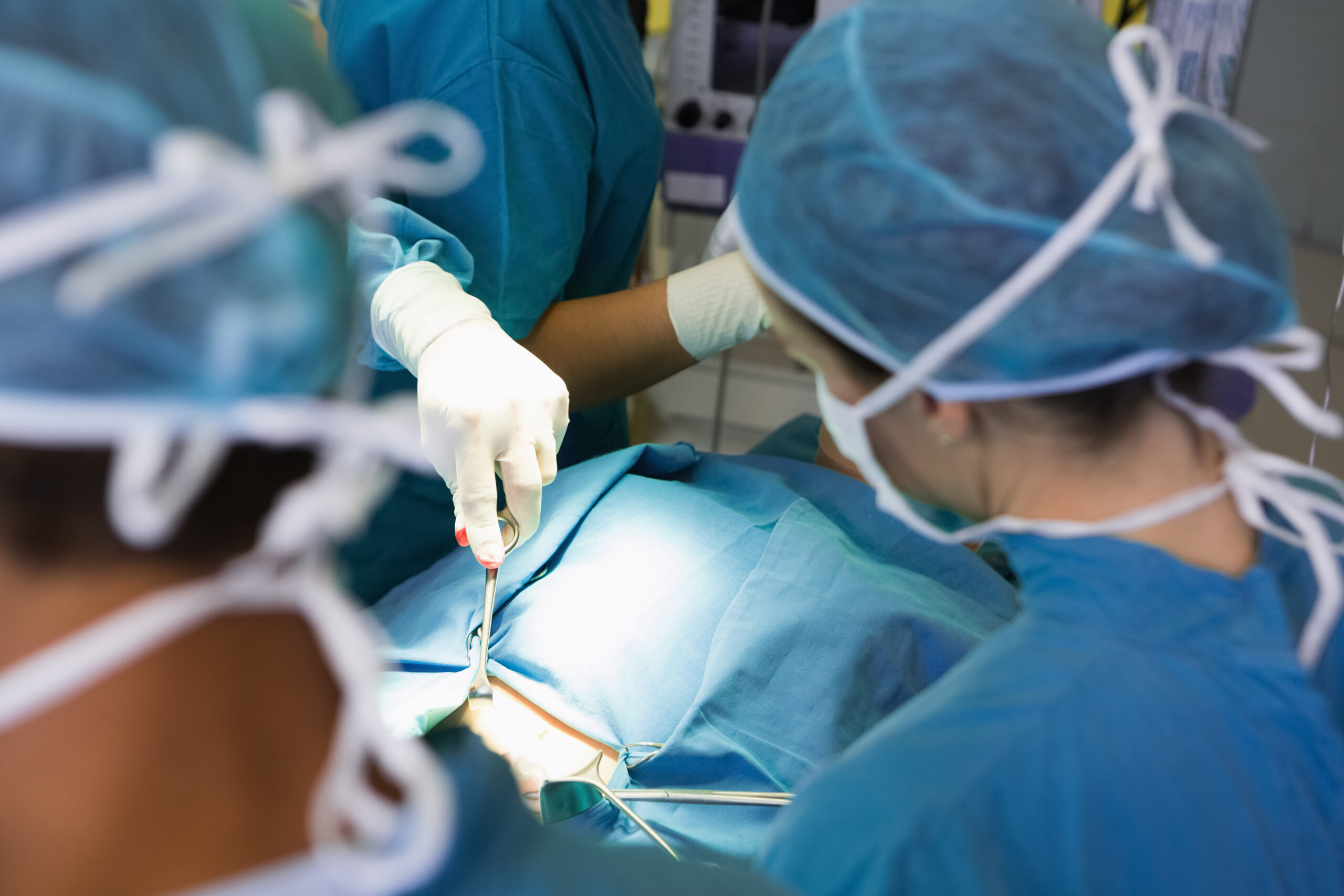
Surgery is not a medical act performed exclusively by the surgeon. In any operation, however minor, a team participates, and each member has a specific function. The team is made up of the surgeon, assistants, the surgical instrument nurse, the anesthetist, the hemotherapist and the specialist in internal medicine or internal balance.
New anesthetic techniques allow the surgeon to operate under special conditions, making it possible to regulate vital processes at will. Blood banks make blood and plasma available to restore normal blood conditions.
Today it is possible to enter the living heart in order to improve congenital malformations or acquired alterations. This has been possible in part because operations can be performed with extracorporeal circulation, temporarily replacing the pumping function of the heart.
Another important device is the artificial kidney, which extracts catabolites and purifies the blood. Replacement surgery can now be performed, substituting certain organs, bone fragments, arteries, veins and other structures. Sometimes they are replaced with plastics. Corneal transplantation is performed almost daily.