
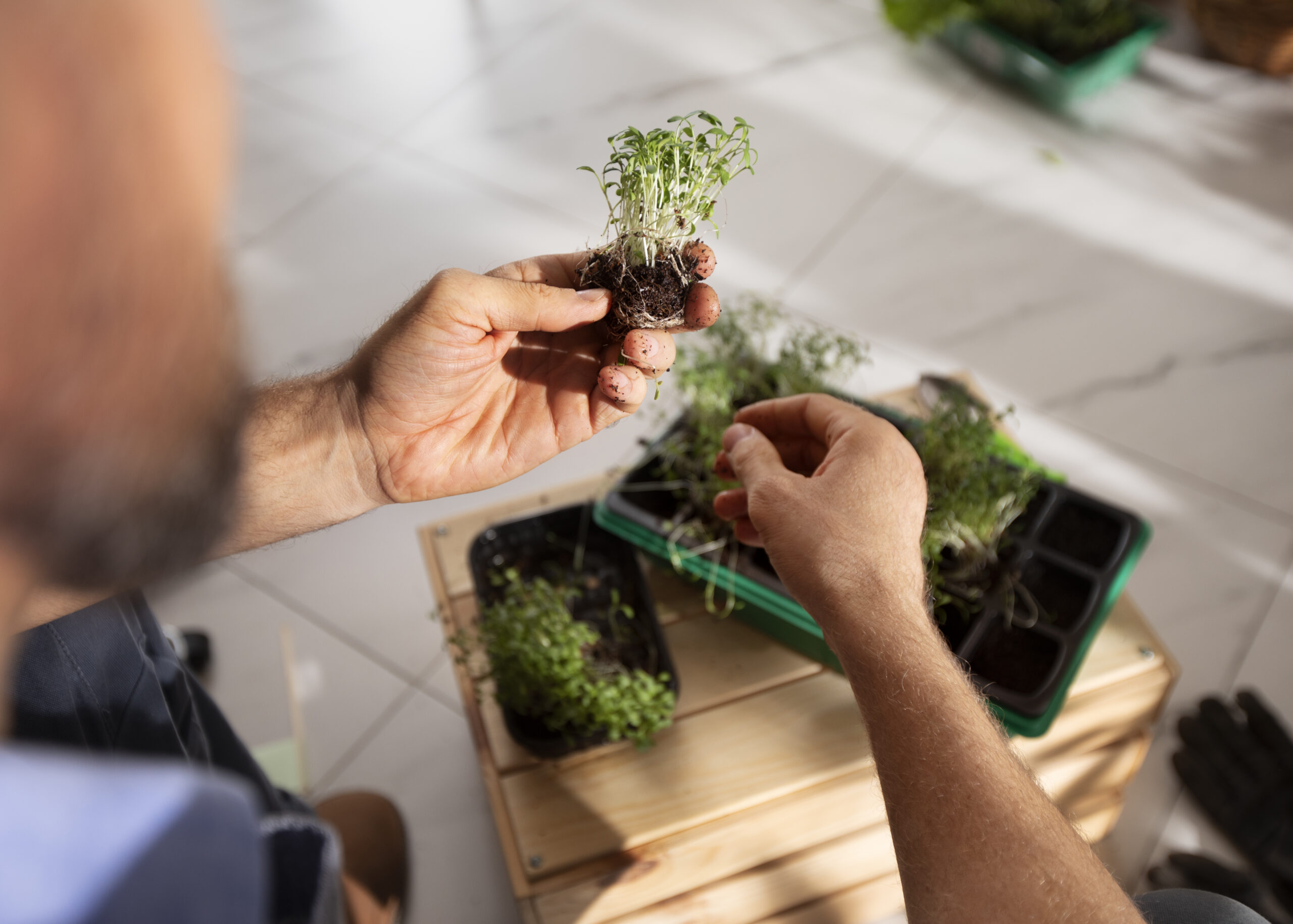
Community-based food production is beginning to deliver the expected results, bringing healthy meals to family tables.
Access to fresh and nutritious food is limited—or entirely absent—in many parts of the world. In response, multiple solutions are being explored to ensure that the right to a daily meal is not the hardest need to fulfill.
In this context, where public policies are often insufficient, innovative solutions driven by private organizations, foundations and social entrepreneurs are emerging. One of them is solidarity aquaponics, a food production model that combines environmental efficiency, low cost and a direct impact on the health of communities affected by malnutrition.
Malnutrition remains one of the main determinants of poor health worldwide. It not only affects child development and the immune system, but also increases the risk of chronic diseases, reduces school performance and perpetuates cycles of poverty.
For this reason, local production of healthy food has become a key tool for health prevention, often promoted outside traditional state structures.
What Is Aquaponics and Why It Matters for Health
Aquaponics is a system that integrates fish farming (aquaculture) with soilless plant cultivation (hydroponics) in a closed-loop environment. Organic waste produced by the fish is converted by beneficial bacteria into nutrients for plants.
In turn, the plants purify the water, which returns clean to the fish tanks. The result is a highly efficient system that uses up to 90% less water than conventional agriculture, requires no chemical fertilizers and can be installed in limited spaces—making it ideal for urban settings.
Its greatest value in vulnerable contexts lies in its ability to produce protein-rich, vitamin- and mineral-dense foods consistently and locally.
Leafy greens, tomatoes, aromatic herbs and fish such as tilapia or catfish form part of a basic diet that addresses recurring nutritional deficiencies in populations with limited access to fresh food.
Across Latin America, Africa and Asia, solidarity aquaponics projects promoted by NGOs, cooperatives and impact-driven companies demonstrate that food production can function as a public health strategy.
This model prioritizes food autonomy: it does not simply distribute food, but builds productive capacity within communities through technical training, collective management and nutrition education.
Some projects are developed in partnership with community kitchens, neighborhood health centers or schools, integrating food production with prevention programs, child weight monitoring and improvements in household diets.
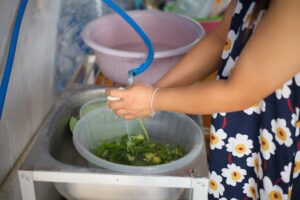
In other cases, aquaponics becomes a source of income by enabling the sale of food in local markets.
Overall, these initiatives generate multiple benefits for communities. Improvements are recorded in diet quality, with reductions in chronic malnutrition, anemia and micronutrient deficiencies.
Aquaponics also acts as a preventive strategy, reducing in the long term the prevalence of diseases associated with poor diets, such as type 2 diabetes, obesity and cardiovascular conditions.
Community health specialists emphasize that investing in healthy food systems is one of the most effective ways to improve health indicators—especially in areas where access to hospitals, medical professionals or medications is limited or nonexistent.
In this sense, solidarity aquaponics complements other privately driven initiatives that have shown strong public health impact, such as mobile hospitals, foundation-funded vaccination campaigns or clean water access projects. All share the same objective: addressing the structural causes of disease, not only its consequences.
Another standout feature of these projects is their educational approach. Implementing aquaponics systems requires nutrition workshops, technical training and community management skills.
In communities where malnutrition is closely linked to a lack of employment opportunities, learning how to produce healthy food not only improves diets but also strengthens self-esteem and a sense of belonging.
The active participation of women and young people is particularly important, as they often lead family nutrition efforts and manage community spaces.
Solidarity aquaponics highlights a central reality: health should not be addressed only through hospital care. Ensuring access to a healthy meal is a fundamental priority. In contexts where public systems fall short, these private and community-led initiatives offer an innovative, scalable and deeply human response.
Rather than replacing the state, such projects complement and reinforce public health from the ground up by confronting malnutrition and food insecurity directly.