
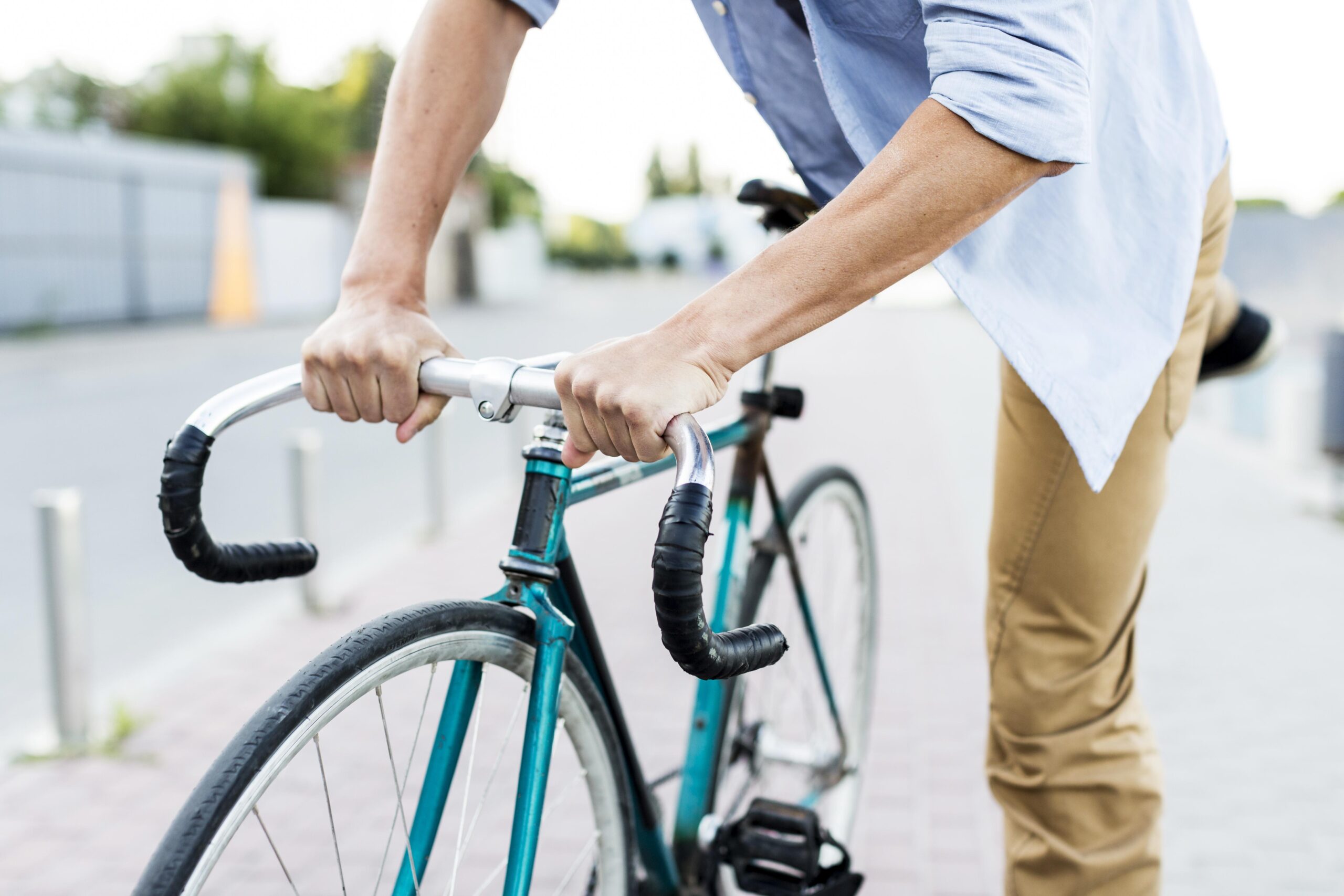
Transporting medicines and healthcare services in isolated areas has found an efficient and low-cost solution in the bicycle. Here is an overview of how these projects are organized.

Medical logistics in rural or vulnerable regions requires creative strategies to ensure access to care and medicines, since traditional health infrastructure is often insufficient.
Cyclists play a crucial role in this landscape. They travel through rural paths, forests, and peripheral neighborhoods carrying essential medicines in insulated backpacks adapted for their task.
These so-called health cycle routes have become one of the most innovative and efficient movements for delivering healthcare. They are driven by private and community organizations seeking to reduce the global inequality in access to medical services.
The concept is simple: where ambulances and health vehicles cannot go, a bicycle can.
Health Cyclists: A Growing Project
Projects centered on bicycles as key transportation tools have expanded rapidly. A vehicle often associated with recreation now fulfills a vital role: saving lives.
In many vulnerable communities, both rural and peri-urban, access to medicines depends on long travel times, high transportation costs, climate disruptions, or the complete absence of public transit.
Health centers are often kilometers away, and medicine shortages are common. In response, foundations, cooperatives, and private donors launched initiatives to ensure continuity of treatment in areas lacking adequate infrastructure.
The bicycle has become an unexpected solution due to its low cost, adaptability, and ability to navigate obstacles.
While bicycles gained relevance in urban sustainable-mobility movements, their application in rural healthcare logistics is more recent. In Argentina, Bolivia, Peru, and several sub-Saharan African countries, independent organizations designed safe routes connecting community pharmacies, health posts, and dispersed settlements.
These cycle routes are not always marked with signs or painted lanes as in cities. Instead, they operate as pre-designed circuits coordinated with community agents, health promoters, and local nurses.
The bicycles, adapted with reinforced carriers and small thermal containers, transport everything from painkillers and antibiotics to insulin, contraceptives, nutritional supplements, and primary-care kits—making secure transport essential.
The “Pedal Salud” initiative, launched in 2021, began in the rural north of Argentina, where ambulances frequently got stuck on dirt roads that became inaccessible during rainy months.
Chronic treatments were often interrupted, and preventive care nearly impossible. With a team of local cyclists trained as health promoters, Pedal Salud created a weekly distribution system, established safe delivery points, and developed an offline app to record deliveries and medical alerts in areas without connectivity.
Within one year, continuity of treatment for hypertension and diabetes improved significantly, and emergency consultations related to preventable complications decreased.
The initiative also strengthened ties between the community and health agents, since the cyclists were local residents who knew every path and every family—creating a more human, sustained model of accompaniment.
A similar initiative operates in the Bolivian highlands, where a social enterprise created bicycle routes to transport nutritional supplements and vitamins for children at risk of malnutrition.
The bicycle not only overcomes geographic barriers but also avoids prohibitive costs. Local health promoters carry out weekly rounds, combining health education, nutritional monitoring, and distribution of essential supplies—leading to early detection of critical cases.
This work is complex, which is why routes are planned using georeferencing systems, and cyclists carry portable solar-powered systems to keep temperature-sensitive medicines cold. Basic sensors track temperature and travel time to ensure that products such as vaccines or insulin remain in safe conditions. In some projects, electric bicycles have expanded coverage areas.
Health cycle routes have also brought together actors who seldom interacted in the past: bicycle manufacturers, social organizations, public-health institutes, and private donors working side by side.
The model demonstrates that innovation does not always mean high technology—sometimes a traditional tool like the bicycle becomes an efficient, sustainable, and culturally embedded solution.
Its low cost allows replication without the need for large-scale funding, and maintenance can be handled within the community itself. The expansion of these initiatives highlights the role of civil society and the private sector in public health.
Although governments hold primary responsibility, community organizations are providing simple, intelligent solutions that transform realities.