
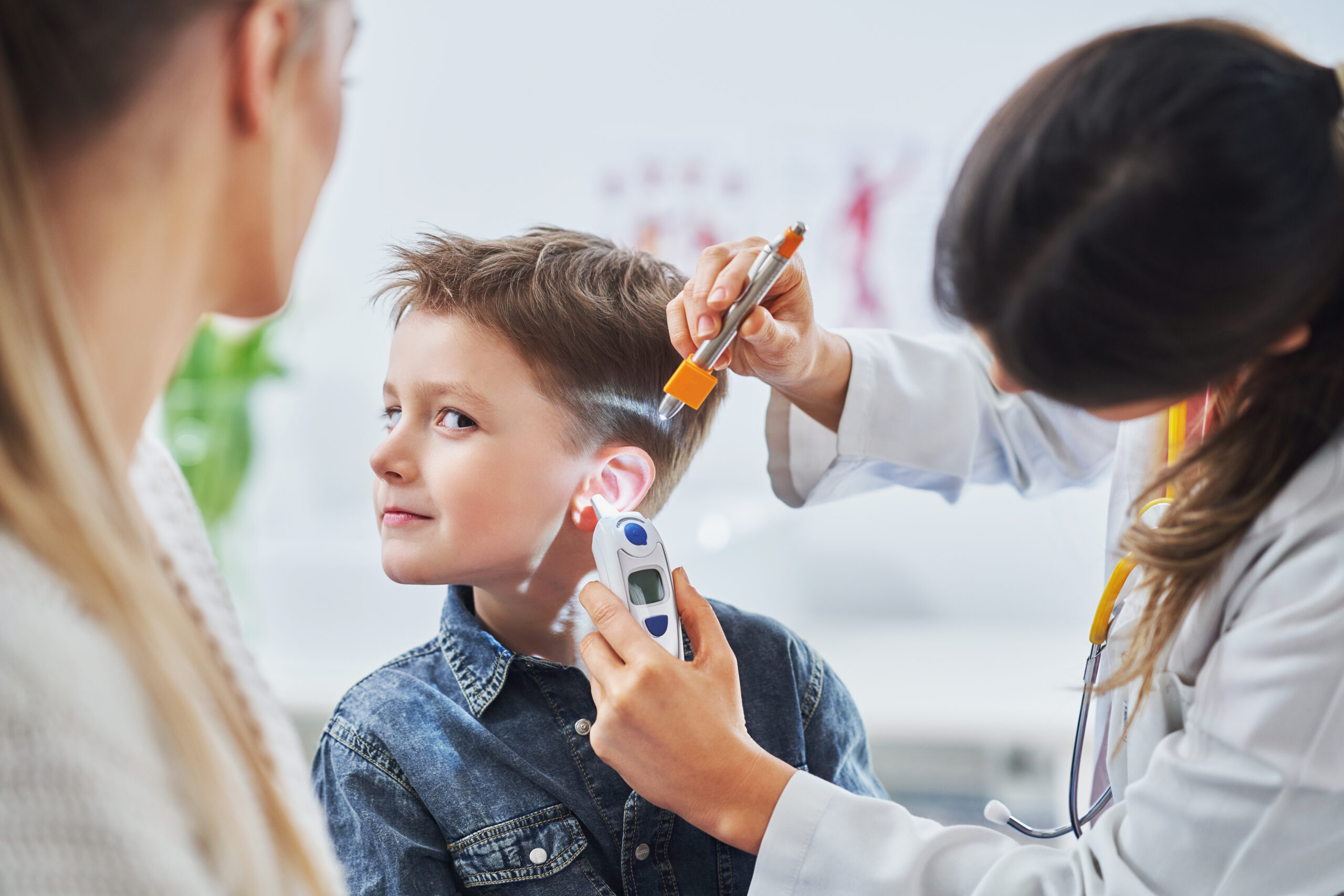
Childhood hearing loss is one of the major challenges in child development, and specialized care is scarce in many rural and vulnerable communities.
Early detection of hearing loss is one of the most effective interventions to ensure proper cognitive, social, and language development during early childhood.
Hearing is not only about perceiving sounds—it is about understanding, communicating, and forming bonds. But this importance is often overlooked in rural regions of Latin America, where medical centers are far away and specialists are scarce. Thousands of children grow up without proper diagnosis for health conditions that could affect their development.
In these areas, the hearing gap is not only sensory but also social and territorial. Faced with this concerning reality, private initiatives are demonstrating that improvements in public health do not depend solely on governments. Foundations, civil-society organizations, and technology companies have begun designing programs that bring devices, training, and diagnostic tools directly to isolated communities.
These programs, which rely on portable devices and digital tools, are successfully identifying hearing loss in babies and young children who had never before had access to a specialist.
Diagnosis, Prevention, and Action: Programs to Ensure Hearing Health
The World Health Organization estimates that more than 34 million children worldwide live with some degree of hearing loss. In many Latin American countries, fewer than 20% of newborns in remote regions receive a timely hearing evaluation.
This inequality shows a clear trend: the later hearing loss is detected, the greater the risk of delayed language development, school difficulties, and socialization barriers.
Distance to medical centers, lack of public transportation, financial constraints, and the shortage of specialists mean that thousands of families are deprived of the right to know whether their children hear well.
With public systems unable to provide care in all regions, the private sector has opened a new chapter in community health by responding to unmet demands.
A key factor behind this transformation is the development of portable hearing-screening devices. Unlike traditional hospital equipment, these tools are lightweight, battery-powered, and compatible with tablets or mobile phones.
They can detect hearing loss through otoacoustic emissions or automated auditory brainstem responses, and are designed to function without stable electricity or reliable connectivity—sometimes even in areas with no signal at all. Data is securely stored and synchronized once the device reconnects to a service area.
The development of tele-audiology platforms represents another major breakthrough, allowing specialists based in cities to analyze results remotely—significantly reducing waiting times in rural areas.
This combination of technology and remote expertise has produced a structural shift by closing geographical gaps.
The “Listen to Grow” program, launched in 2019 by a private foundation in northern Argentina, is one such example.
Professionals travel to rural schools and community centers equipped with portable diagnostic tools, offering free evaluations to babies, preschoolers, and early-primary students. When risk indicators are detected, results are sent to audiologists and ENT specialists in Buenos Aires, who analyze the information and issue a digital report.
Within 48 hours, families receive a preliminary diagnosis and, when needed, a referral to specialized centers. The program has already screened more than 7,500 children—many in areas with no prior access to hearing evaluations.
Another case is the “Rivers That Hear” program in the Peruvian Amazon, funded by an international organization. Teams carry hearing-screening technology on boats that travel along rivers to reach remote communities.
Professionals not only conduct screenings but also train rural teachers to recognize early signs of hearing loss and support families through initial treatment steps.
The results of these programs show substantial improvements in the quality of life of thousands of children who were diagnosed with hearing problems, demonstrating that early intervention leads to timely support and treatment.
The most successful programs go beyond screening—they accompany families by helping them secure appointments, apply for financial aid for hearing aids, coordinate transportation, and work with schools to ensure educational inclusion.
The expansion of early hearing-loss detection in rural areas shows that private-sector participation can complement—without replacing—the state by adding flexibility, innovation, and rapid response capacity.
These initiatives are creating replicable models that combine technology, community training, and local engagement.